About the Data
Species records include data on invasions history, distribution, ecology, impact, and more. These data were gathered from published literature and targeted surveys. All records have undergone expert review, unless otherwise noted.
Species Profiles
NEMESIS includes detailed information on about 500 species of marine and estuarine of invertebrates and algae introduced to the United States. Each record contains information on taxonomy, distribution, ecology, and impacts, as well as references.
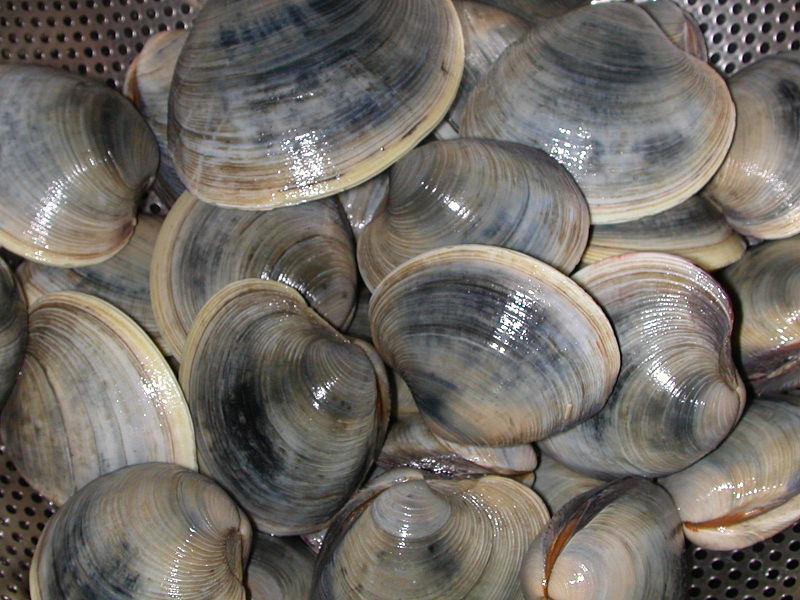
Mercenaria mercenaria
Mercenaria mercenaria is commonly known as the Hard Clam or the Northern Quahog. It is a large bivalve (up to 150 mm) which can be found in sandy to muddy habitats from the mid-intertidal to about 18 m depth. It is native to the East Coast of North America from southern Florida to the Gulf of St. Lawrence. It is an important commercial shellfish species in its native range and has been widely transported with oysters or stocked officially and unofficially at a number of locations around the world. Introduced populations are known from the Gulf of Mexico, Puerto Rico, California, Hawaii, Japan, China, Atlantic Europe and the Mediterranean. In many invaded areas, it is restricted to small, confined reaches of estuaries, which probably limits its economic or ecological impacts. However, dense populations could have substantial impacts by filtering phytoplankton and excreting nutrients, as was seen in the Colorado Lagoon, California.
Daily Invader for 2026-10-12